
A Journey Through Time and Spirituality at Meenakshi Amman Temple
Introduction:
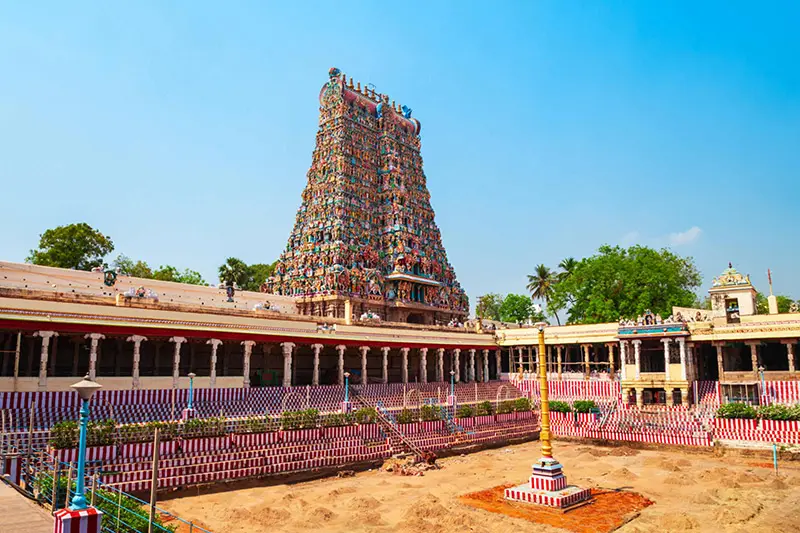
Madurai, often referred to as the “Athens of the East,” is a city steeped in centuries of history, culture, and devotion. At the heart of this ancient city lies the Meenakshi Amman Temple, one of the most magnificent and revered temples in South India. Known for its towering gopurams (gateway towers), stunning architecture, and intricate sculptures, this temple is a testament to the grandeur of Dravidian architecture and the spiritual richness of Tamil Nadu.
For travelers seeking to explore the spiritual and cultural heritage of South India, SRI Tours Travels offers a comprehensive journey to Madurai, where the Meenakshi Amman Temple provides an unmatched experience of divine architecture, history, and devotion. In this blog, we’ll take you on a detailed journey through the temple’s history, significance, rituals, and the best travel experiences in Madurai.
1. Meenakshi Amman Temple: The Heart of Madurai
The Meenakshi Amman Temple, dedicated to Goddess Meenakshi (a form of Parvati) and her consort Lord Sundareswarar (a form of Shiva), is one of the most famous temples in India. It has been a major pilgrimage center for centuries and continues to attract millions of devotees from across the world.
A. History and Mythology
The temple’s origins trace back to ancient times, with references to its existence in ancient Tamil literature, particularly the Sangam texts. According to legend, Goddess Meenakshi was born with three breasts, and only when she met Lord Shiva, did the third breast vanish, signifying her destiny as the consort of Shiva. This divine union is at the heart of the temple’s mythology and is celebrated through rituals and festivals.
Over the centuries, the temple has undergone several renovations, particularly during the reign of the Pandya Kings. The temple’s most notable features—the gopurams (gateway towers) and the sanctum—are the result of centuries of architectural mastery, drawing influences from the Chola, Pandya, and Nayak dynasties.
B. Architectural Wonders
The Meenakshi Amman Temple is renowned for its stunning Dravidian architecture. The complex is an architectural marvel, boasting 14 gopurams, the tallest of which rises to an impressive height of 170 feet. The temple covers a vast area of around 6 acres and is decorated with intricately carved sculptures of Hindu deities, animals, and celestial beings.
The temple’s main sanctum houses the idols of Lord Sundareswarar and Goddess Meenakshi, and visitors are allowed to offer prayers in both sanctums. The beauty of the temple’s design, especially its vibrant colors, intricate carvings, and majestic towers, leaves every visitor in awe. The outer walls of the temple are adorned with detailed depictions of various episodes from Hindu mythology.
2. Rituals and Pujas: The Spiritual Rhythm of Madurai Temple
The Meenakshi Amman Temple is not just a historic monument; it is a living temple that plays an active role in the lives of thousands of devotees. The daily rituals and pujas at the temple are an integral part of the experience, providing a glimpse into the rich traditions of Tamil Nadu.
A. The Golden Lily Pond (Puthu Mandapam)
One of the unique features of the temple is the Golden Lily Pond located within the temple complex. It is believed that the pond, with its clear waters, is sacred and was originally used for purifying devotees before entering the sanctum. The Puthu Mandapam, a hall situated near the pond, is a peaceful place for devotees to sit and reflect on their spiritual journey.
B. The Arti Rituals
The Meenakshi Amman Temple follows a strict ritualistic tradition. The day begins with the early morning rituals, where the temple priests perform the abhishekam (ritual bath) to the deities using sacred water, milk, and other offerings. The aarti (devotional song) is sung by the temple priests at sunrise, filling the temple with divine vibrations.
One of the temple’s most fascinating rituals is the evening procession. The idol of Goddess Meenakshi is taken around the temple in a decorated chariot, accompanied by music, chants, and prayers. This procession is a beautiful spectacle, offering an opportunity for devotees to witness the divine union of Meenakshi and Sundareswarar.
3. Festivals at Meenakshi Amman Temple: A Cultural Extravaganza
Madurai’s cultural fabric is intricately tied to the grand festivals celebrated at the Meenakshi Amman Temple. These festivals, rich in tradition and devotion, are an essential part of the temple’s spiritual and social life.
A. Meenakshi Thirukalyanam: The Divine Wedding
One of the most important festivals at the Meenakshi Amman Temple is the Meenakshi Thirukalyanam or the divine wedding of Goddess Meenakshi and Lord Sundareswarar. This event, celebrated annually during the Chitrai festival (typically in April or May), marks the celestial wedding of the divine couple.
The wedding procession is a grand affair, with the idol of Meenakshi dressed in bridal attire and the idol of Sundareswarar dressed as the groom. The festival is marked by music, dance, and elaborate rituals, with thousands of devotees participating in the celebration. The Meenakshi Thirukalyanam is not only a religious event but also a cultural extravaganza that showcases the rich traditions of Madurai.
B. Other Major Festivals
Apart from the Chitrai festival, the Meenakshi Amman Temple also celebrates several other important festivals, including:
- Panguni Uthiram (March–April): A festival dedicated to Lord Murugan and celebrated with grand processions and rituals.
- Navaratri (September–October): A nine-day festival dedicated to Goddess Durga, with dance, music, and elaborate prayers.
- Deepavali (October–November): The Festival of Lights, where the temple is illuminated with thousands of lamps, creating a mesmerizing sight.
These festivals attract thousands of pilgrims, making the temple one of the busiest and most visited pilgrimage sites in India.